

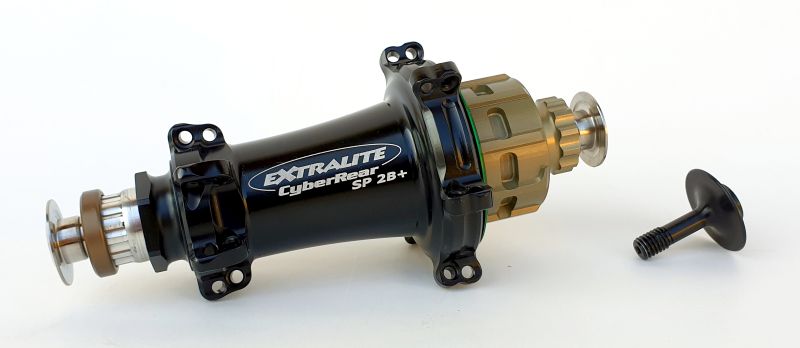

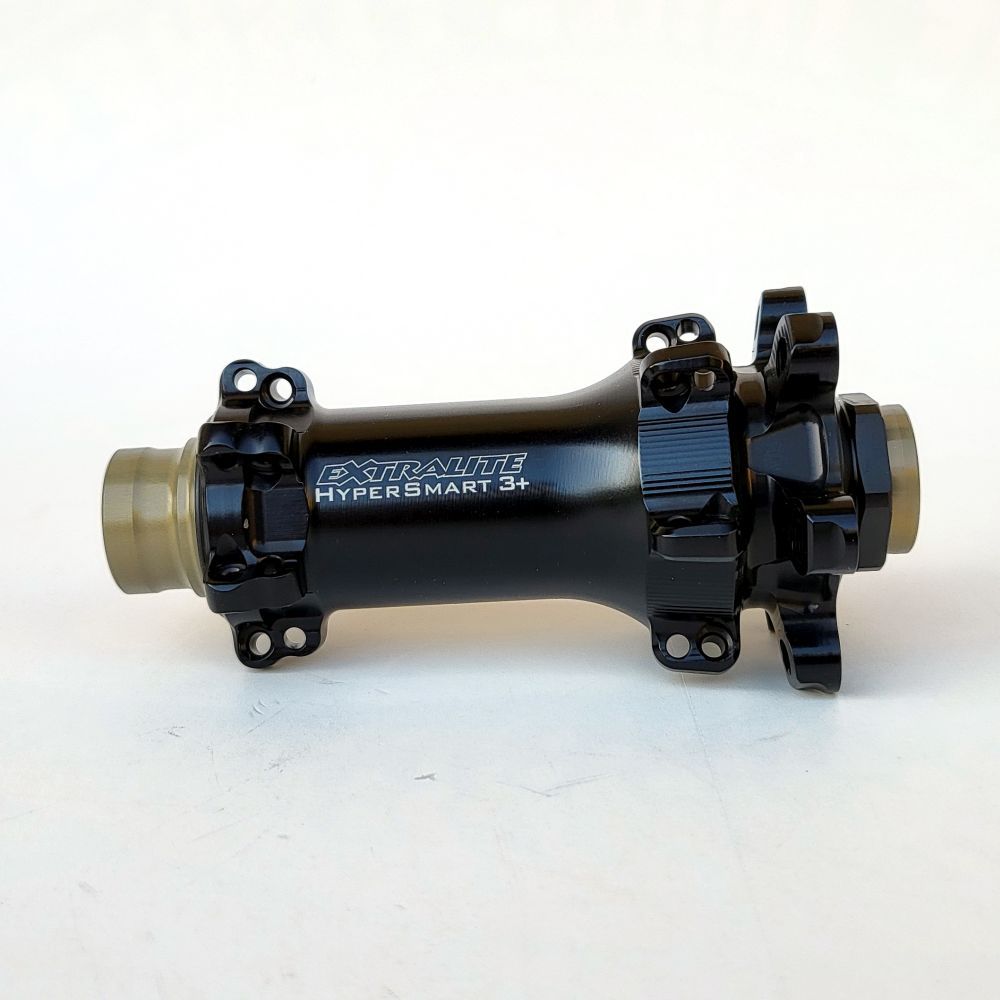
MTB hub: Hyper '1' family
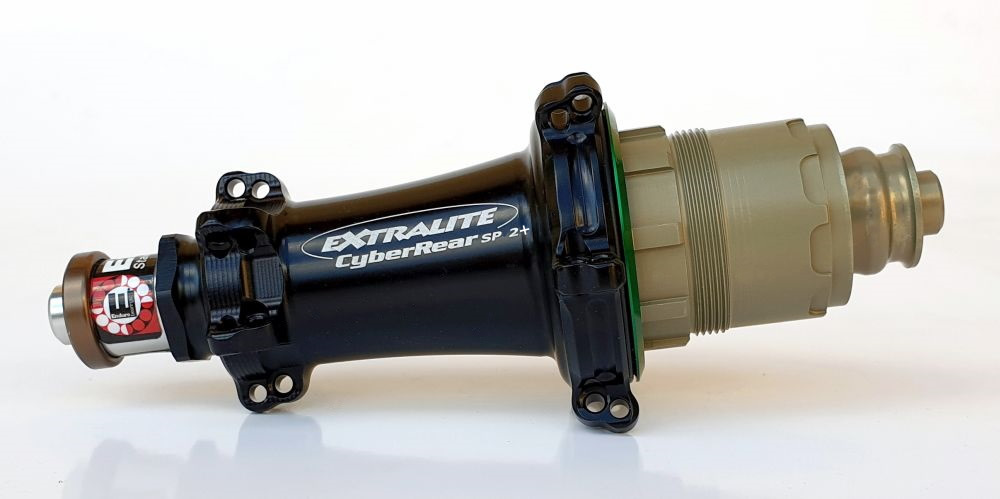
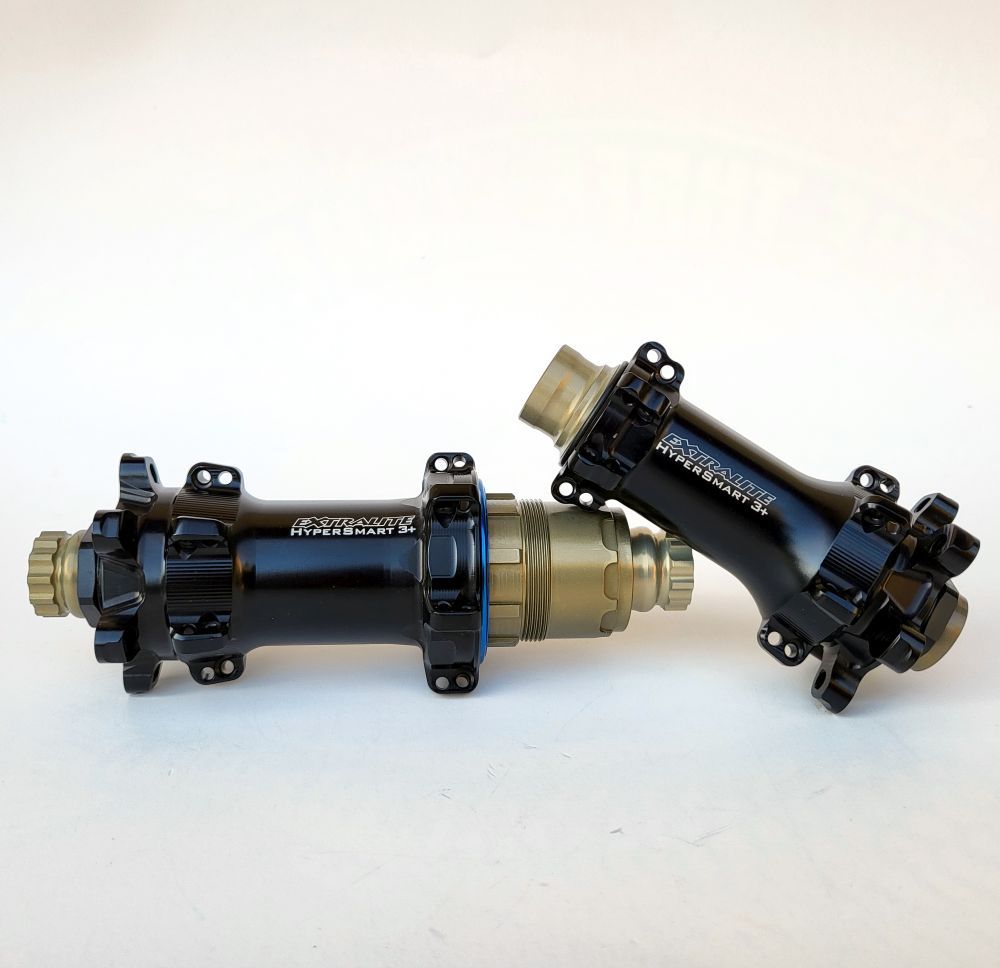
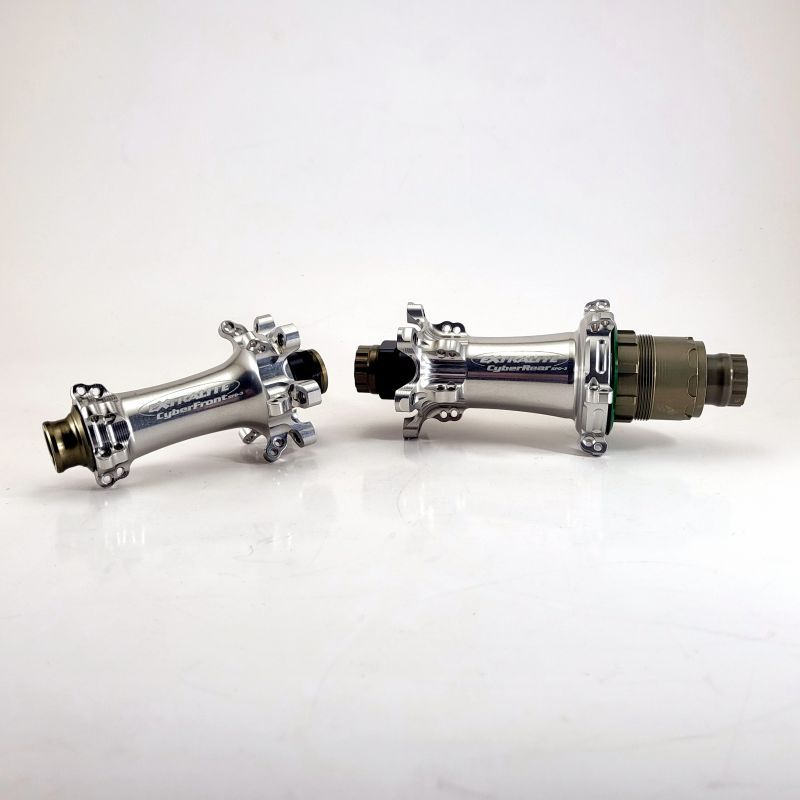
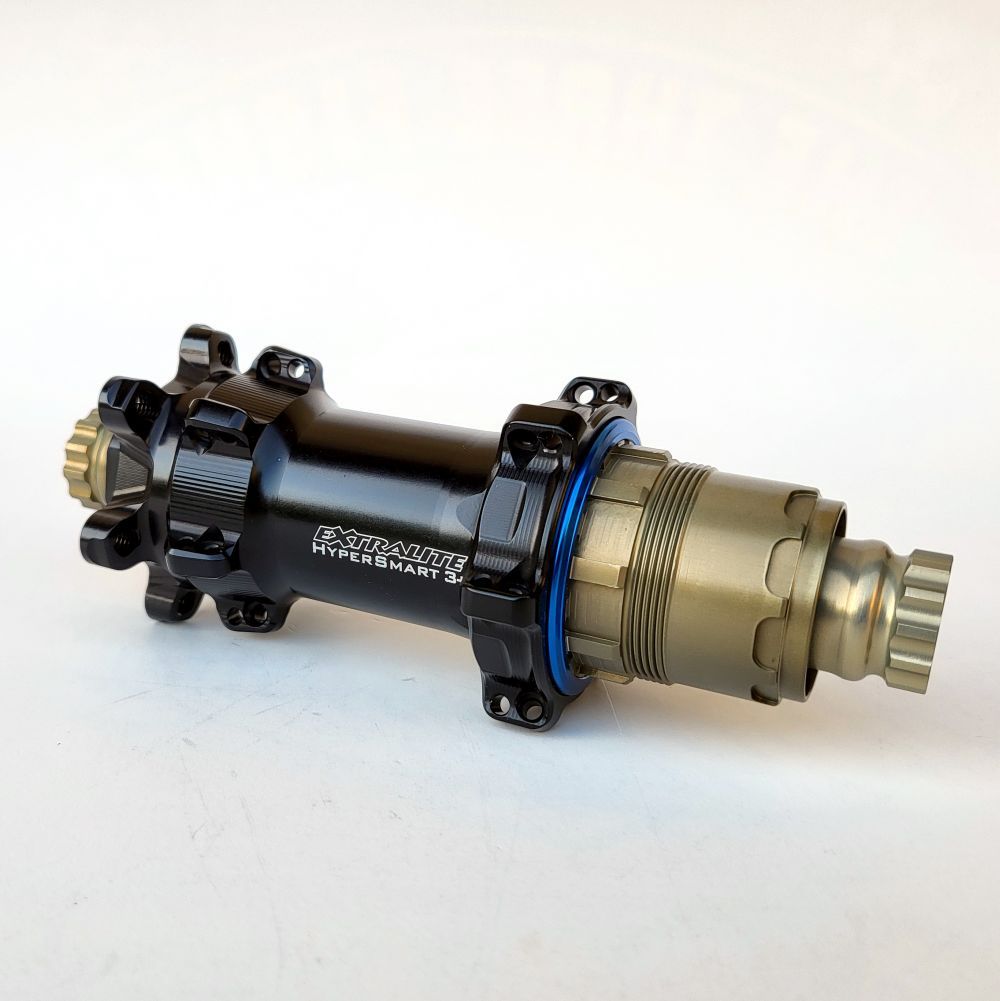
Hyper "1" hubs (This hub family includes "HyperRear" and "HyperCamber" first versions)
Hyper hubs have been long-term tested in the wet environment of north Europe from the start.
For over a decade we have constantly developed and refined each single detail of our Hyper hubs.
Properly maintained hubsets reach a very remarkable lifespan, read below how to.
Never spray-wash hubs in general (any model of any brand).
Avoid high-pressure washing directly onto freewheel, even the best lip-seals aren't capable to resist to hi-frequency water spray.
When water-moisture get inside the hub mechanism it carries dirt particles too, these can quickly damage the internal hub parts.
The amount of wear depends on the quantity of dirt laying inside, the mileage, and how abrasive are the dirt fine particles.
These 3 factors combined can bring to a premature wear of bearings, hub-shell splines and freehub mechanism.
"Hyper" hubs bearings
All models of "Hyper" hub family feature unique external O-ring seals for an additional protection of the bearing seals and are standard equipped with Enduro 440 stainless bearings that do not suffer for oxidation-corrosion. In clean conditions good bearings can last for 30-40.000 Km, however in the mtb riding environment water can get in bringing fine abrasive dirt particles with it.
For the reason described above the wear of metal races and balls directly depends to the type and amount of dirt that get inside the races.
All models can be ordered with optional super-high grade steel and non-corrodable Ceramic bearings for reduced friction and longer lifespan: HyperCeramic or Enduro XD-15.
"Hyper" hubs Servicing / Frequent Errors
We warmly recommend to learn the basics about our MTB engagement system from the start in order to ensure an extended durability of your hub.
Hyper freehub mechanism works in a far different way than other front-engagement hubs you may already know (ChrisKing / DT / others).
Never wrench on Hyper hubs by instinct or past experience but read manuals and strictly follow the instructions step by step (don't skip any step).
Understanding "Hyper" freehub principle is extremely important.
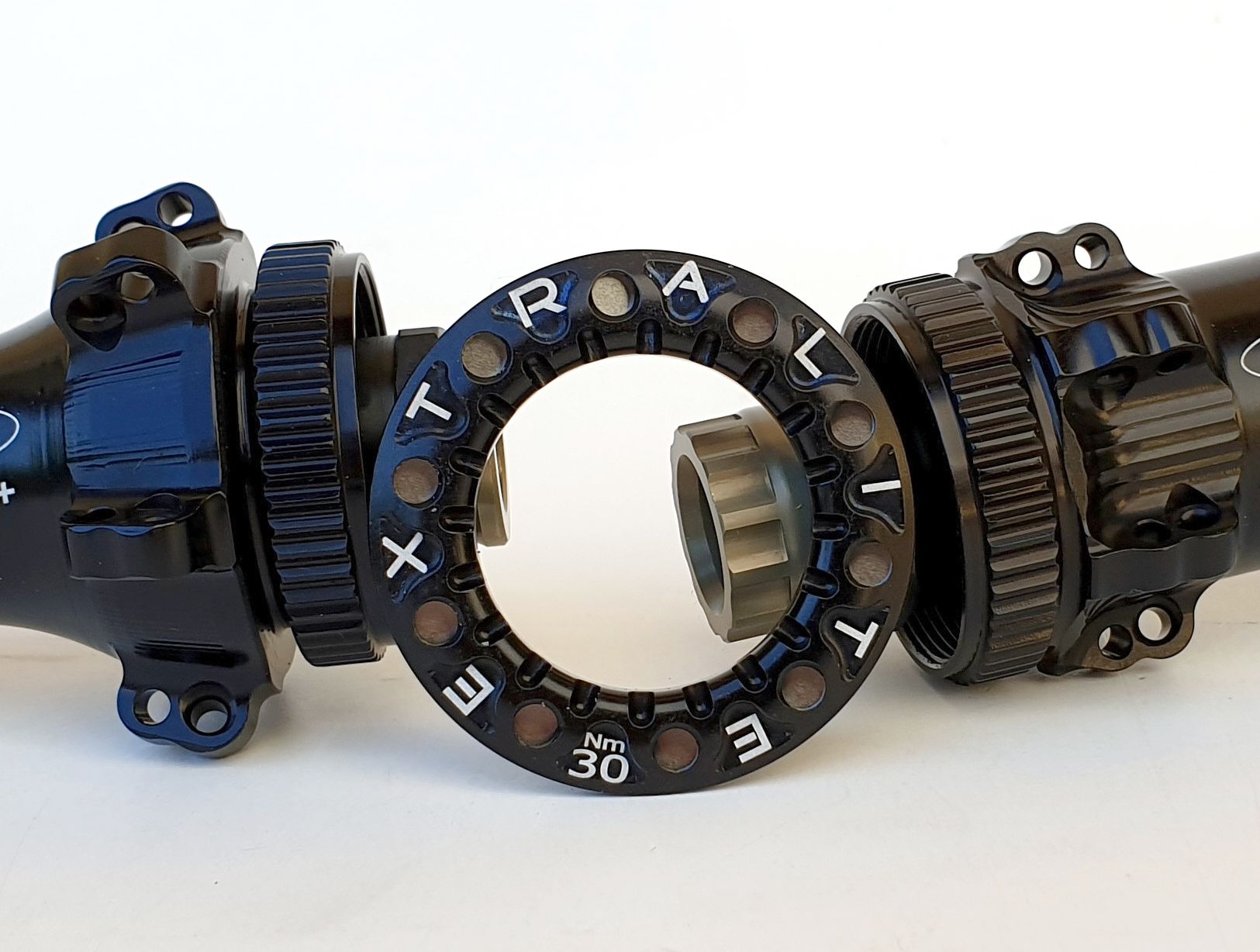
HyperRear freehub function is fully based on the velocity of "Floating-Ring" movement.
"Floating-Ring" movement should happen instantly ( one millisecond only) and this dictates the servicing rules you find on our manuals.
Once few engagement teeth got damaged by a slow / un-free movement of the Floating Ring the entire freewheel assembly must be replaced.
Avoid the following errors that will seriously damage the hub internal parts (immediately or in a very short time):
- Too much grease.
- Uncorrect positioning of grease. Never apply grease on hub-shell splines (oil them only).
- Wrong grease type (Lithium grease is one of the most dangerous).
- Micro Tuner way off its correct position (this increases also the clearance between the engagement teeth)
Regularly service your Hyper hub strictly following its instruction manual step by step (don't skip any step).
Again: never wrench or service Extralite hubs by instinct or only by past experience!
Old and new parts
As you see the first signs of wear we warmly recommend to install a new Floating Ring, it will help to prevent wear of hubshell splines.
Never install a worn-out Floating Ring in a still good hubshell, it will quickly damage and wear the hubshell splines.
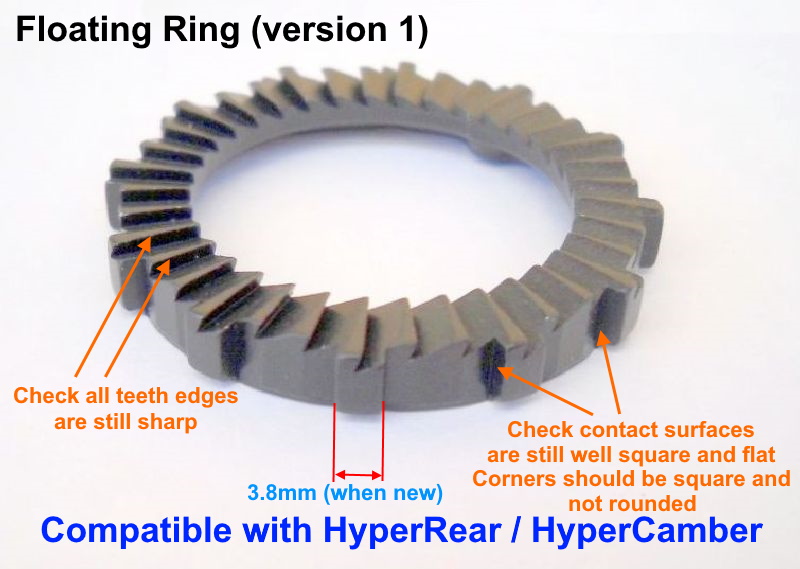
Hubshell Splines - Potential risk
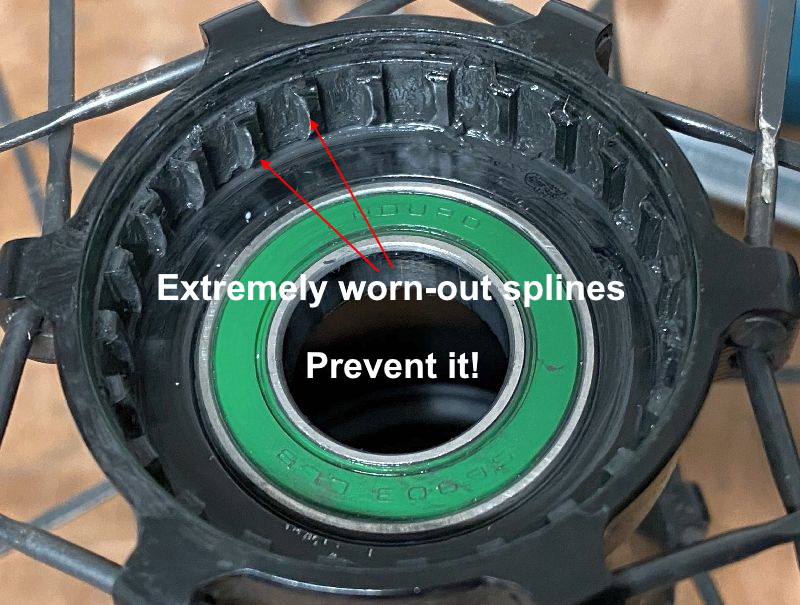
When riding with dirt inside the freewheel mechanism the hard particles of sand will badly grind the hubshell splines.
As the "floating ring" doesn't move well and instantly a freewheel mis-engagement can permanently damages the freewheel parts.
In this case replacing "floating ring" and/or "Freewheel body" does not solve.
See this example of badly worn-out hubshell splines that need an expensive hub-shell replacement (or eventually sent back for re-sharpening).
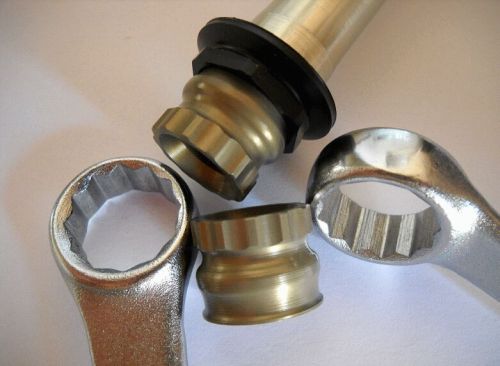
Opening "Rear Axle-Ends" on Thru-axle models
Use only two 17mm closed wrenches.
Feel free to ask for additional tech info, we'll be happy to help!